
North Carolina Vehicle Law
North Carolina Windshield Tint Laws and the AS-1 Line Rule
Vehicle LawTint is allowed along the top of the windshield only, and the boundary is five inches down or the AS-1 line, whichever is longer. Here is what the statute actually says and what changed on 1 December 2025.
On This Page
- 01What Is The Legal Tint In NC Right Now
- 02Windshield Tint And The AS-1 Line
- 03Why You See Both 35 Percent And 32 Percent Quoted
- 04What Changed On 1 December 2025
- 05Is Windshield Tint Legal In NC
- 06Medical Exemptions And Reflective Tint
- 07Will A Cracked Windshield Pass Inspection In NC
- 08What Happens To The Tint Band When A Windshield Is Replaced
- 09Frequently Asked Questions
North Carolina permits windshield tint only along the top of the glass, and it cannot extend more than five inches below the top edge or below the AS-1 line, whichever measurement is longer. Every other window on a standard passenger car must let through at least 35 percent of visible light. Both rules sit in General Statute 20-127, and neither one changed on 1 December 2025, when the state stopped measuring tint during annual safety inspections and dropped the $10 testing fee. Enforcement did change. A driver with tinted windows must now lower whichever window an officer approaches during a traffic stop, and an illegal tint citation still carries a Class 3 misdemeanor.
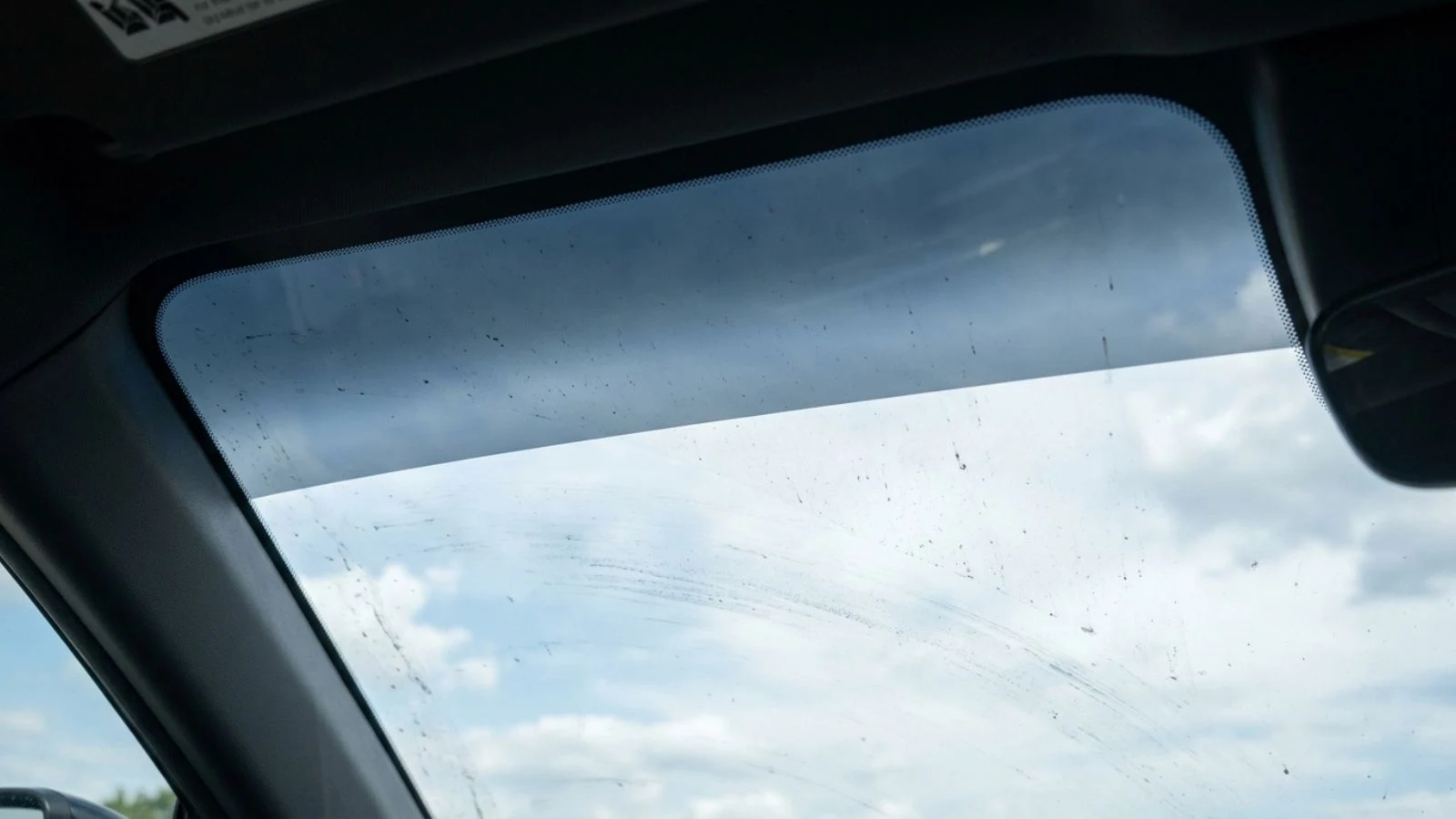
What Is The Legal Tint In NC Right Now
The legal tint limit in NC is 35 percent visible light transmission on every window of a passenger car, with the windshield governed separately by position rather than by percentage. Film must be nonreflective, light reflectance cannot exceed 20 percent, and red, yellow, and amber film are prohibited on any window.
| Window position | Passenger car | Multipurpose vehicle or truck |
|---|---|---|
| Windshield | Top strip only, five inches or the AS-1 line, whichever is longer | Top strip only, five inches or the AS-1 line, whichever is longer |
| Front side windows | 35 percent VLT minimum | 35 percent VLT minimum |
| Back side windows | 35 percent VLT minimum | Exempt behind the driver |
| Rear window | 35 percent VLT minimum | Exempt behind the driver, and on property-hauling vehicles |
| Reflectance | 20 percent or less | 20 percent or less |
| Prohibited colors | Red, yellow, amber | Red, yellow, amber |
The vehicle-type split is where most drivers get caught. Statute 20-127 lists a window of a multipurpose vehicle behind the driver among its exceptions, along with the rear window of a property-hauling vehicle. A sedan receives no such allowance. The same film that is legal on the second-row glass of an SUV is a violation on a four-door car.
Windshield Tint And The AS-1 Line
General Statute 20-127“The windshield of the vehicle may be tinted only along the top of the windshield and the tinting may not extend more than five inches below the top of the windshield or below the AS1 line of the windshield, whichever measurement is longer.”
North Carolina General Statute 20-127
That closing phrase hands the driver the more generous of the two boundaries. Where the AS-1 line on a particular windshield sits six inches down, six inches is the limit. Where it sits four inches down, the five-inch measurement governs instead.
AS-1 stands for American Standard, a glazing rating defined by the American National Standards Institute. On most vehicles the line falls roughly five inches below the top edge, above the rearview mirror and outside the sweep of the wipers. It is rarely labeled along its full length. Drivers looking for it should expect a faint etched line, a row of small dots, or a series of hash marks, and on some glass the AS1 designation appears only inside the block of manufacturer markings in a lower corner.
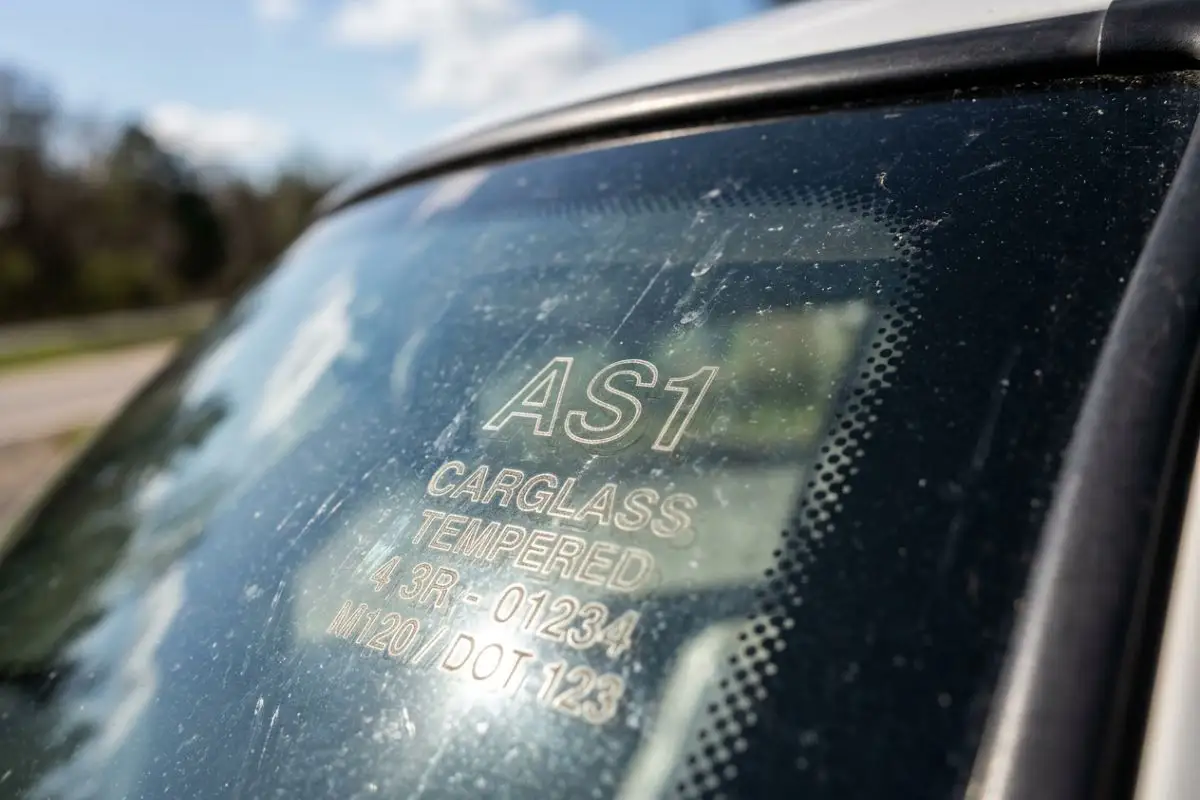
Glass carrying no visible AS-1 marking creates a measuring problem rather than a legal one in North Carolina, since the five-inch boundary still applies and can be measured from the top edge with a tape.
Why You See Both 35 Percent And 32 Percent Quoted
Both figures are in the law and they do different jobs. Thirty-five percent is the standard a tinted window has to meet. Thirty-two percent is the meter reading at which compliance stops being arguable, because the statute states that a window which “measures a total light transmission of more than thirty-two percent (32%) is conclusively presumed to meet this restriction.”
The three-point gap exists because light meters vary. Film sold as 35 percent can read 33 or 34 on a roadside device without being illegal. News coverage of the December change reported the limit as 32 percent, which describes the enforcement floor accurately while leaving out the standard sitting behind it. A reading of 31 percent is a violation. A reading of 33 percent is not.
What Changed On 1 December 2025
Three things changed, and none of them touched how dark tint may legally be. Tint measurement came out of the annual state safety inspection. The $10 tint-testing fee attached to it was eliminated. Drivers with tinted windows must now roll down whichever window an officer approaches during a traffic stop.
Taking tint out of the inspection did not take it out of the law. Officers still carry approved light meters and still write citations, a point WRAL made directly in its coverage when it reported that drivers could face a fine despite the inspection change. For a Mecklenburg County driver the practical effect is narrow. An inspection station in Charlotte no longer measures the film. A traffic stop on I-77 or I-485 still can.
Is Windshield Tint Legal In NC
Yes, across the top strip only. Aftermarket film applied to the full windshield is illegal in North Carolina no matter how light it is, because the statute limits windshield tint by position instead of setting a transmission percentage for that glass. A 70 percent film across the whole windshield breaks the same rule as a 20 percent one.
Factory shade bands sit outside that rule. The green or blue gradient built into original glass is part of the laminate rather than a film applied over it, and it forms part of the manufacturer's own compliance with federal glazing standards. Nothing requires its removal, and matching it becomes the live question once the glass is replaced.
Medical Exemptions And Reflective Tint
North Carolina issues a medical exception permit to drivers whose condition makes them photosensitive to visible light, and that permit arrives with a sticker that has one required position. The statute directs the Division to give the holder “a sticker to place on the lower left-hand corner of the rear window of the vehicle to which it applies.” It goes between the glass and the tinting when film is installed, so it has to be positioned during application rather than added later.
Failing to display it is an infraction carrying a $200 fine, separate from any tint citation. The sticker exists partly to warn a future buyer that the vehicle's windows do not meet the standard, which is why it stays with the vehicle rather than the driver.
Reflective film fails a different test, and no medical permit lifts it. The 20 percent reflectance ceiling rules out mirrored and metallic products regardless of how much light they transmit. Metallic films also interfere with embedded antennas and toll transponders, which is why most current products use ceramic construction instead.
Will A Cracked Windshield Pass Inspection In NC
A cracked windshield does not fail the North Carolina safety inspection, because windshield glass condition is not among the inspected items. The state checks headlights, accessory lights, directional signals, foot brake, parking brake, steering, tires, horn, rearview mirror, windshield wipers, exhaust system, and emission control components. Wipers are inspected. The glass they sweep across is not.
Damage still matters for reasons the inspection does not measure. A windshield is a structural component that supports the roof in a rollover and provides the backstop the passenger airbag deploys against, and a break spreading across the driver's line of sight degrades visibility long before it reaches anything an inspector looks at. Damage caught early stays repairable. Charlotte Auto Glass NC seals breaks still inside repairable limits through rock chip repair, and handles windshield repair in Charlotte when a crack has grown but has not run to the edge.
What Happens To The Tint Band When A Windshield Is Replaced
Replacement glass has to carry the same band the original did, or the vehicle loses it. A factory shade band is a specification rather than a finish, recorded alongside thickness, curvature, sensor placement, and acoustic interlayer for that VIN. Aftermarket glass built to a general fit for the model frequently carries a different band depth, a different shade, or none at all.
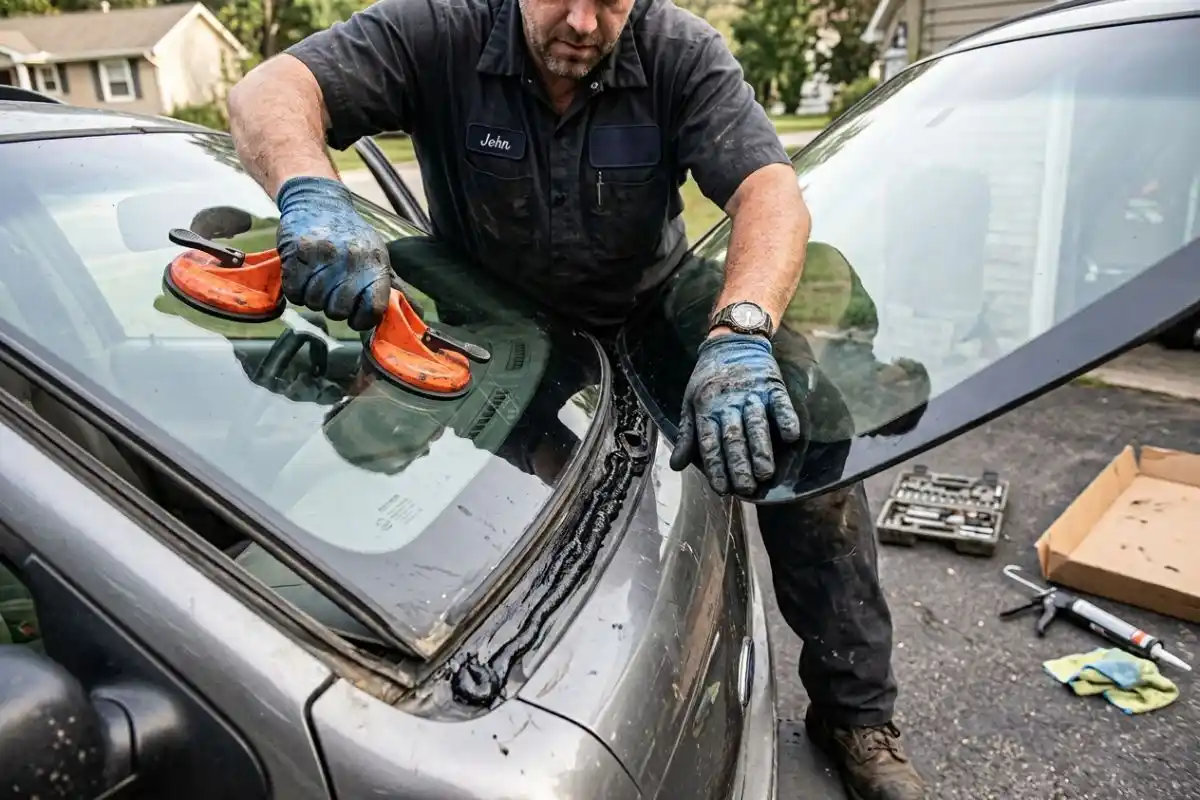
The mismatch surfaces two ways. A shallower band lets more afternoon glare through on the north-south runs of I-77 and I-85, where the sun sits low and square across the windshield through the second half of the day. Ending the band at a different height than the original also reads wrong against the A-pillars from inside the car. Drivers who want the original specification matched can have Charlotte Auto Glass NC quote OEM windshield replacement against the VIN before glass is ordered, which is the same point at which camera bracket position and rain sensor placement get confirmed.
A windshield tint strip added to new glass is a separate decision, and the AS-1 rule governs it exactly as it governed the old windshield. Anyone planning one after a windshield replacement in Charlotte should have the boundary measured on the glass that is actually fitted, since band depth and AS-1 position vary between OEM and aftermarket parts for the same vehicle.
Frequently Asked Questions
What does a tint ticket cost in North Carolina?
An illegal tint violation is a Class 3 misdemeanor under General Statute 20-127, covering both the application of illegal tint and the operation of a vehicle carrying it. Courts set the fine rather than the statute fixing it. A separate $200 infraction applies only to a permit holder who fails to display the medical exemption sticker.
Do North Carolina tint rules apply in Fort Mill and Rock Hill?
No. South Carolina sets its own limits under S.C. Code 56-5-5015, and the standard there is 27 percent visible light transmission rather than 35 percent. South Carolina is also stricter on windshields, permitting tint only above the AS-1 line and prohibiting windshield film entirely when no AS-1 line is visible on the glass. Drivers who move across the state line and re-register a vehicle take on that standard.
Is out-of-state tint legal to drive in North Carolina?
Yes. General Statute 20-127 lists a window of a vehicle registered in another state among its exceptions, so a car registered elsewhere is not measured against the 35 percent standard while it is on North Carolina roads. Registering that vehicle in North Carolina removes the exception.
Does factory privacy glass count against the 35 percent limit?
Factory privacy glass is manufactured dark rather than tinted with film, and it appears mostly on the rear windows of SUVs and vans. Those are the same windows the multipurpose vehicle exception already covers, so the two rarely collide. Adding film on top of factory privacy glass is what creates the problem, because a meter reads the combined transmission of glass and film together.
Does window tint interfere with ADAS cameras or rain sensors?
Film on a windshield can affect both, which makes placement matter as much as darkness. Forward-facing cameras and rain sensors read through a specific patch of glass behind the mirror, and film covering that zone changes what reaches the sensor. A tint strip kept inside the AS-1 boundary sits above the sensor cluster on most vehicles.
Can tint be reapplied to a replacement windshield?
Yes, once the new glass has cured. Urethane needs its full cure time before anything is applied over the edge area, and the AS-1 position on the replacement glass should be measured rather than assumed, since it can sit at a different depth than the glass it replaced.
Charlotte Auto Glass NC works across Mecklenburg, Cabarrus, Union, Gaston, and Iredell counties, including Concord, Matthews, Huntersville, Mooresville, and Fort Mill. Mobile service reaches home and workplace addresses at no additional charge, and the Charlotte call center books appointments 24 hours a day on (704) 998-7025. Insurance claims are filed and billed directly. Drivers can request a windshield quote with the VIN to have band depth and sensor configuration confirmed before any glass is ordered.